How to take these ideas into your context

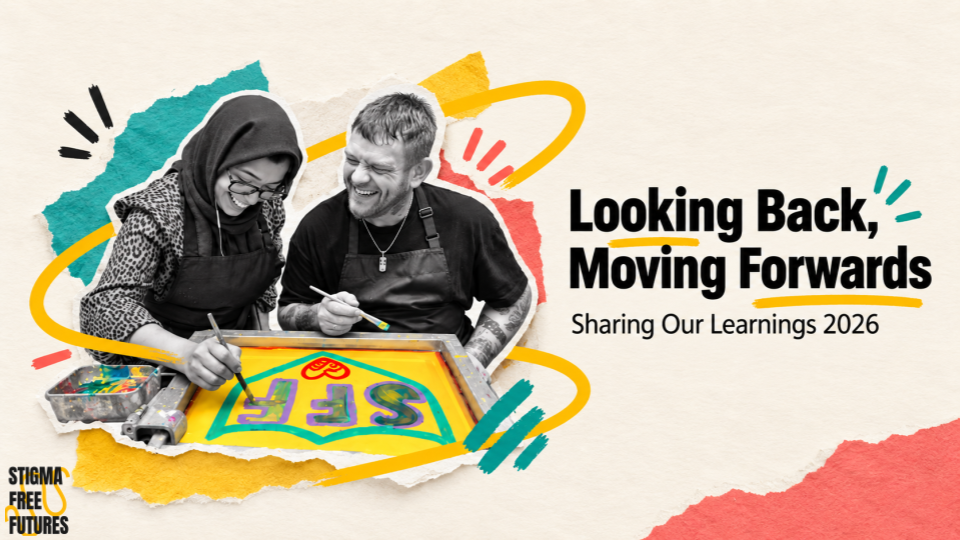
Support conversations about stigma-free practice and help drive change in your organisation or community
Following the Stigma Free Futures online launch event in September 2026, our intention is for you to use these resources, practical tools, learning and ideas in your space and with the community you’re involved with. We want you to honour the integrity of the Stigma Free Futures work, but by all means, borrow the ideas, build on them and make them better.
Stigma Free Futures launch resource
The recorded 25 minute launch event offers you an insight into the work and a conversation starter. It includes:
An introduction to the design team and our findings;
An understanding of what poverty stigma is;
Definitions of our stigma free principles and what we’re calling for;
What we mean by ‘stigma free practice’;
First hand experiences and learning from members of the design team.
Prompt questions
Bring the recording into your community centre or workplace, and play as part of a workshop, discussion or meeting. Here are some questions we invite you to consider as you take a look at poverty stigma and stigma free practice:
Reflect. Connect. Imagine.
After listening to the recording, we’d love to hear what it brings up for you and the people you work alongside.
What stayed with you?Was there anything that surprised, challenged or particularly resonated with you?
Where do you see stigma showing up?How does stigma affect the people and communities you work alongside?
What are people already doing to challenge stigma?What strengths, ideas or approaches are already emerging from your community?
What needs to change?What would need to be different in services, systems, public conversations or everyday interactions?
What would a stigma-free future look and feel like?What would be different for people experiencing poverty and inequality?
What could we do together?What role could grassroots organisations and communities play in making that change happen and what support would be needed?
One final question
If people with lived experience were genuinely at the centre of decisions about change, what might we do differently?
Acknowledgements
Many people and organisations have supported this work over the years and fed into the work directly. In particular, we wish to acknowledge and thank:
Joseph Rowntree Foundation staff who believed in and supported our efforts to create a stigma free future
Sarah Campbell for her vision and for bringing us all together
Sarah Whitehead for facilitation
Kirsten Nott for coordinating us all, and keeping us well fed
Jonathan Dorsett https://www.jondorsett.co.uk/
Stronger Stories https://strongerstories.org/
Healing Justice https://healingjusticeldn.org/
Those that attended our first in person event in Leeds and helped test and shape our project findings, including people from the following organisations: Leeds Gypsy and Traveller Exchange (Leeds Gate); Sisters of Frida; People’s Economy; and Migrants Rights Network.
Paul Belmonte our BSL interpreter
ATD Fourth World https://www.atd-fourthworld.org/who-we-are/


Comments